How CoScreen streamlined their release comms process by 30%

CoScreen is a collaboration platform built for remote and hybrid technical teams. Its product lets teammates share and control multiple app windows at the same time, making it easier for engineers, product teams, and designers to pair, debug, review work, and collaborate in real time. CoScreen was later acquired by Datadog.
CoScreen, a collaboration tool designed to enable deep collaboration for remote teams, has been building their proprietary screen-sharing technology as a side project since 2015. In 2020, after a viral Hacker News post drove explosive interest in the product, the business raised a $4.6M seed round to expand their team, accelerate product development, and capitalize on the seismic, pandemic-fueled shift to remote work.

“We were astonished by the level of interest we received in the concept," Max Andaker, CoScreen’s Chief Product Officer, tells us. "It was at this point we decided we needed to make CoScreen a full-time commitment, hire a team, and really build out the product."
As a part of these new expansion plans Andaker knew he would need to streamline his release process and ensure he had a direct channel to communicate product updates to CoScreen's rapidly growing user base. Specifically, Max went searching for a tool that would help his product org accomplish three things:
- Keep the CoScreen user base and community up-to-date on what was shipping in a way that was both personalized and on-brand
- Significantly lower the overhead of creating and sending a launch email every time a new feature shipped
- Help the product and engineering org develop a basic product marketing motion as they began their search for a dedicated product marketer
It didn’t take long for Andaker to discover LaunchNotes.
“When my co-founder Till mentioned to one of our investors that we were looking for a tool to help us with these things he immediately recommended LaunchNotes,” Andaker tells us. “He told us several other of his portfolio companies used and loved the product and recommended we check it out. Needless to say, it fit the bill and within a week or so we’d onboarded our team and we were off and running.”
Migrating CoScreen’s release notes from Notion to a modern, purpose-built release comms tool
Prior to LaunchNotes, the CoScreen team had been using Notion to publish and share release notes. Andaker admits that from day one he and Till realized that Notion was far from an optimal solution.
“There’s a huge difference between seeing release notes as a box that needs to be checked whenever something ships and crafting impactful release comms with an intent to showcase product momentum and drive higher engagement,” Andaker tells us. “With Notion, it was clear we were just checking a box. Notion is a great tool, but I quickly realized that burying our product updates in Notion was wasting the best opportunity we had to engage and delight our customers,” he says. “Making the transition to LaunchNotes was an easy decision.
LaunchNotes is a purpose-built for both of these things: delighting customers and driving higher engagement.
Max Andaker, Chief Product Officer
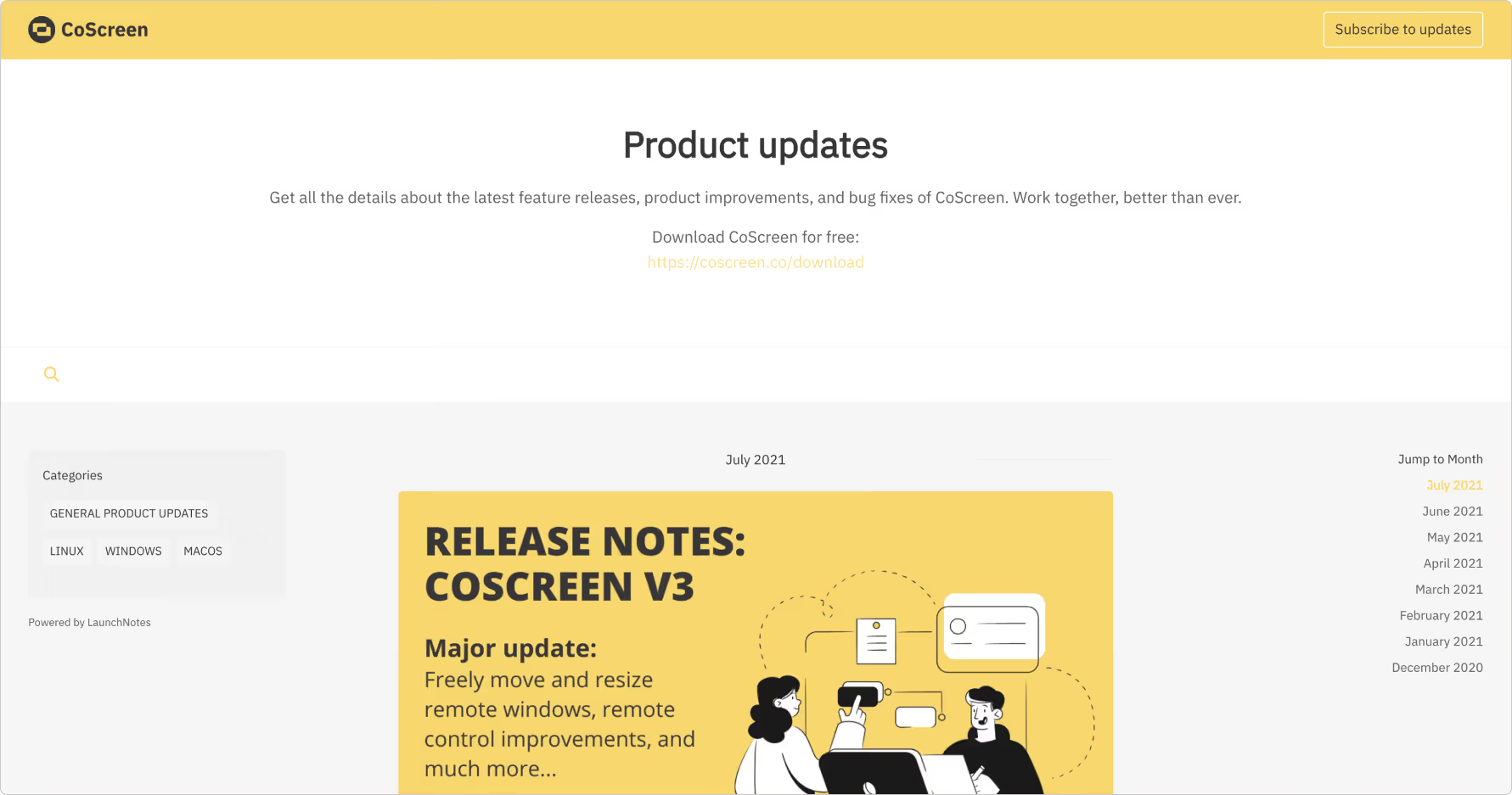
Andaker tells us his team also needed a way to keep CoScreen’s release notes properly segmented across their various apps. As the business introduced separate apps for Mac and Windows the PM team needed a more precise way to reach users with comms about updates being made to their specific app. LaunchNotes’ categories was the perfect solution.
“Beyond just feeling buried, Notion also didn’t provide an easy way for us to update the release notes for one specific app, and, as our user base grew, this became a big issue. When we make updates to the Mac app my team needs a quick way to just reach users of the Mac app,” Andaker tells us. “When I saw that LaunchNotes had custom categories I was sold. It’s such a simple, powerful way to solve a widespread problem that every product team faces.”
The final piece to the puzzle was finding a solution that would fit seamlessly with the CoScreen brand. In his words: “As any startup begins to grow and scale, your brand becomes really important. It’s an extension of your company and product and something that makes you stand out. With Notion we were never able to brand any of our updates, and it never felt professional.”
Andaker continues, “The first thing we did when rolling out LaunchNotes was ensure our LaunchNotes page was in tune with the rest of our website. So now we have the best of both worlds: a purpose-built tool to announce updates and drive engagement that looks and feels like a natural extension of the CoScreen brand. It’s been a huge win for us, and an even bigger win for our customers.”
Reducing the overhead of announcing product updates 30% by ditching email
In the early days, before publishing their release notes in Notion, the CoScreen team utilized email as their main channel for communicating new products and features to customers. Andaker admits that before discovering LaunchNotes he wasn’t aware that there were more impactful solutions in the market.
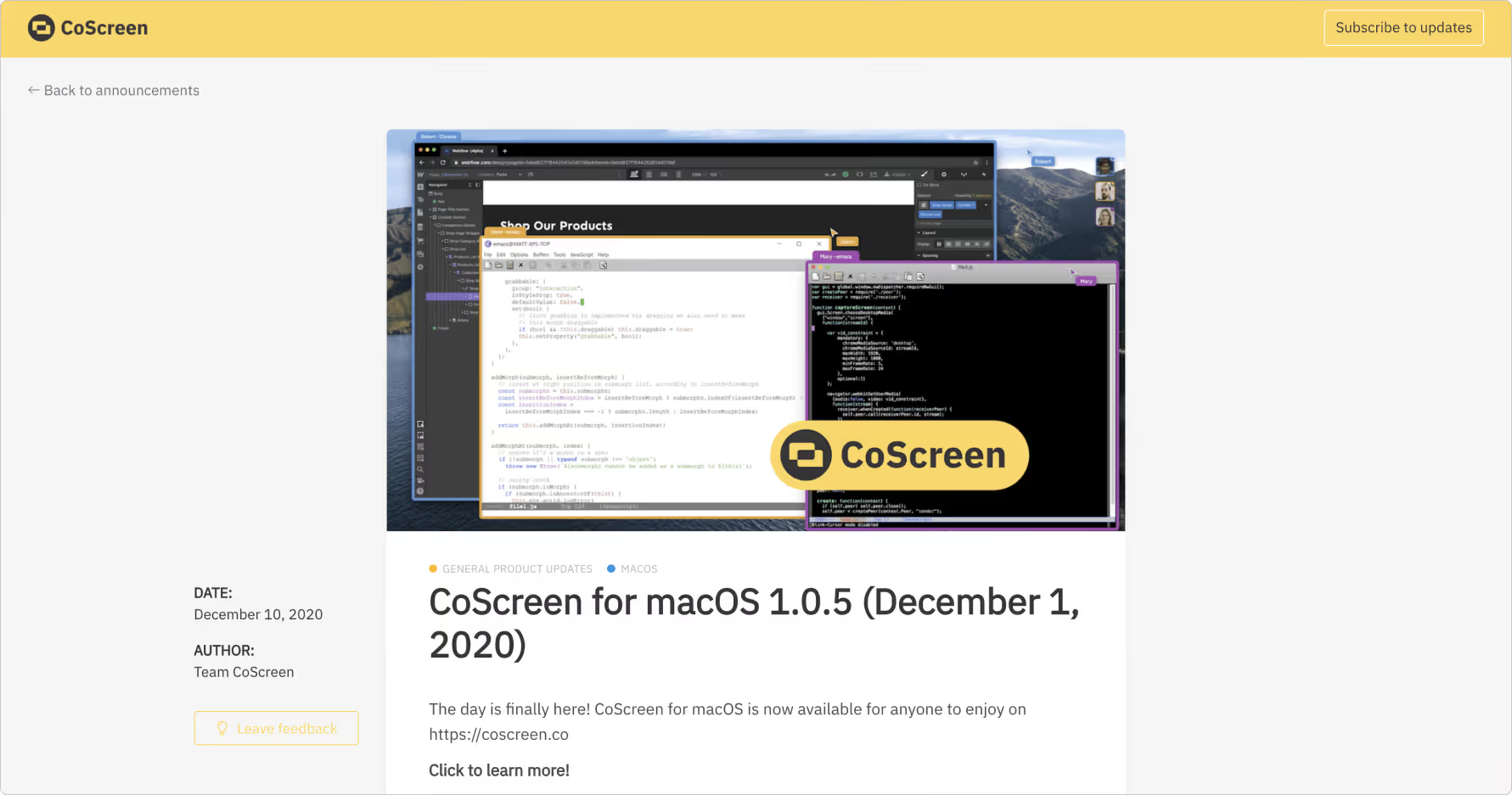
But it’s not just the power and accuracy of LaunchNotes’ segmentation engine that Andaker and his team find valuable. He tells us that switching to LaunchNotes has saved his team hours every week because they no longer have to tediously turn release notes into emails.
“As the rate of our product development increased we ran into two problems with email: The first was that we weren’t sure which updates constituted an email and how often we could email our users before we risked them unsubscribing. We really didn’t want to burn our email list,” he says. Secondly, we were never entirely sure each update was reaching the right audience. Proper email segmentation takes way more time than it should given it’s 2021.”
When Andaker found LaunchNotes he knew both of these friction points would be resolved: “The beauty of LaunchNotes is that it’s a dedicated channel for product change comms, so you know subscribed users are expecting and hungry to hear about updates. And when you combine that with the product’s built-in segmentation engine, we know we’re always going to reach the exact audience that needs and wants to know what’s shipping. As an example, for our company, this means users of our Windows app aren’t going to be getting unwanted notifications about Mac improvements or Linux updates, and vice versa.”
In his words: “Probably the biggest “a-ha!” moment for me with LaunchNotes was when I realized the product auto-generates content into branded email templates for you. So I can draft the release notes once, and LaunchNotes not only knows who needs to receive the update, but creates a branded email from my content,” he tells us.

When I think about all of these productivity gains together, I can confidently say that LaunchNotes has reduced the overhead of our release comms process by at least 30%. And when you’re still a startup, like we are, the value of this kind of time savings is incalculable.
Max Andaker, Chief Product Officer
Building the product marketing muscle through PM and Eng during the search for a full-time PMM
The third and final criteria in Andaker’s search for a new tool was something that could create the guardrails for a simple product marketing motion. While Max and Till were on the search for their first full-time product marketing hire, Andaker says he didn’t want to let the hunt slow them down from “beginning to stand up [their] product marketing motion.”
As Andaker explains: “Hiring product marketers right now is really difficult, and while we were on the search I really needed a tool to help my PM team scale the product marketing function. Even though we didn’t have a full-time PMM, I didn’t want that to stop us from doing things like publishing regular release updates and showcasing our product momentum. At this stage in our growth projecting momentum is vitally important.”
Prior to LaunchNotes, Andaker and the team were struggling to publish product updates due to the time commitment and complication. As he tells us: “Like most Product teams, especially in the early days, we were stretched incredibly thin. There are just never enough hours in the day. As a result, even if the team was shipping incredibly fast, there was no way to quickly promote what we shipped to the world. And that last step of communicating the changes out would just fall through the cracks,” Andaker says.
With LaunchNotes, Max and his team felt they finally had a way to communicate their updates as quickly as they were shipping the software: “In the early days of CoScreen, LaunchNotes essentially served as our PMM arm. One of the most important jobs of Product Marketing is communicating product updates, and LaunchNotes allowed us to do that in a super efficient way.”
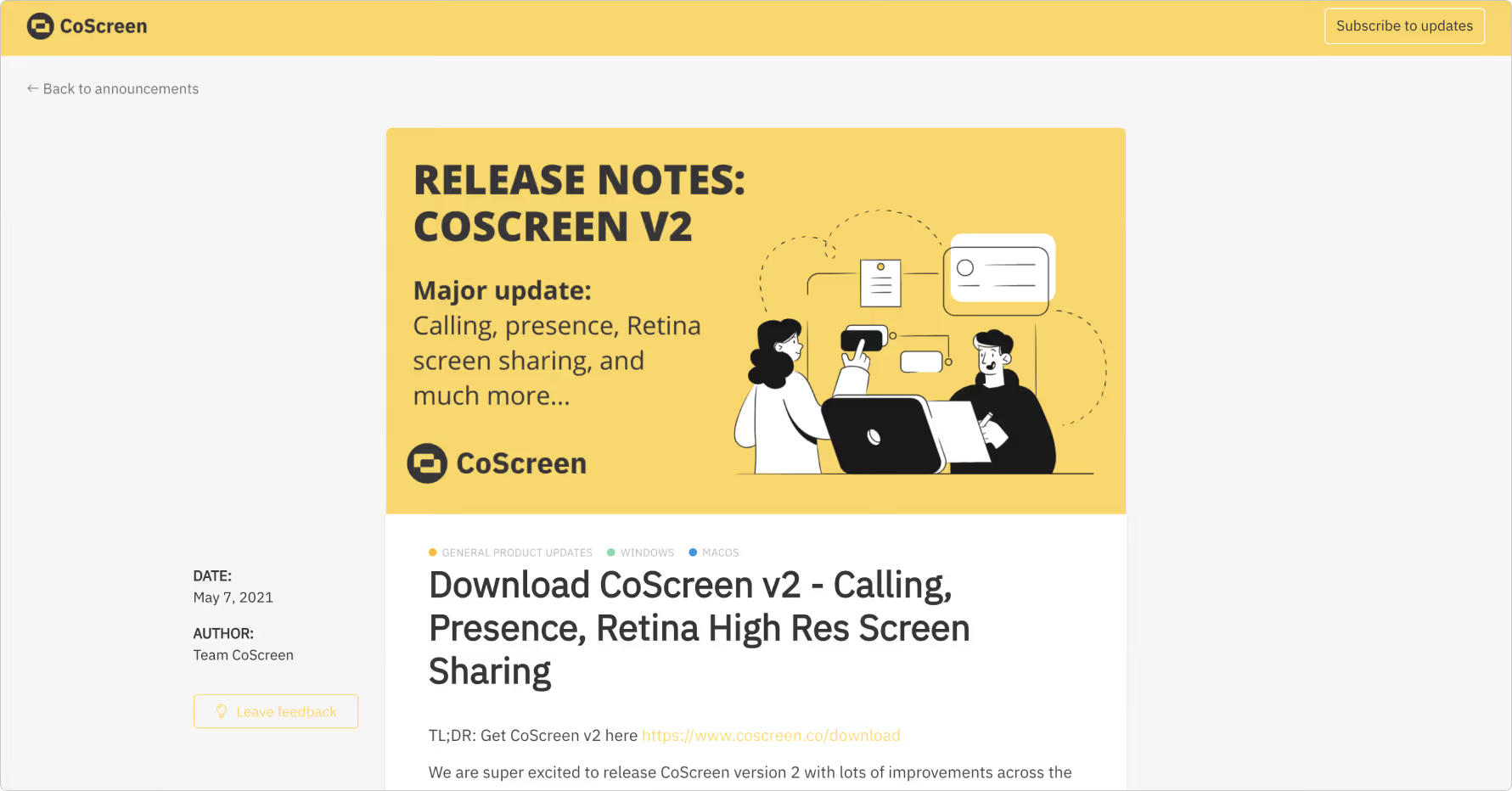
CoScreen has since hired a full-time product marketer and continues using LaunchNotes to announce their product updates. But Andaker shares that having the LaunchNotes launch process in place allowed their PMM to get up-to-speed that much more efficiently: “The product release comms process is such an important one to get dialed in, and the fact we already had that aspect of our product marketing motion in place when we did hire a PMM meant she could step into the role and drive impact that much faster,” Andaker says.
“It’s definitely an added benefit we weren’t expecting, but LaunchNotes went from being our PMM arm as we scaled, to helping our PMM team scale itself as it was getting stood up.”
Closing thoughts
In closing, we asked Andaker two final questions:
- Has anything surprised you about LaunchNotes?
- How would you describe LaunchNotes in one word?
On something that’s surprised him, Andaker responds: “How turn-key LaunchNotes is really blew me away. We had it up and running in less than a week, and were using it to release new features the following week. It’s rare to find software that has that kind of immediate impact.”
When asked to describe LaunchNotes in one word, Andaker responds: “Scalable”. He elaborates: “At the rate we’re growing I knew we needed a tool that would scale with us, and even though we’re twice the size we were a year ago, LaunchNotes continues to meet the needs of our entire team.”
Before our conversation wraps up, Andaker says: “Now that we use LaunchNotes to manage our product updates I don’t know why you’d ever do it any other way.
It’s really been a game-changer for our business.
Max Andaker, Chief Product Officer




